
Over 35 million people worldwide now identify as digital nomads — nearly triple pre-pandemic levels.
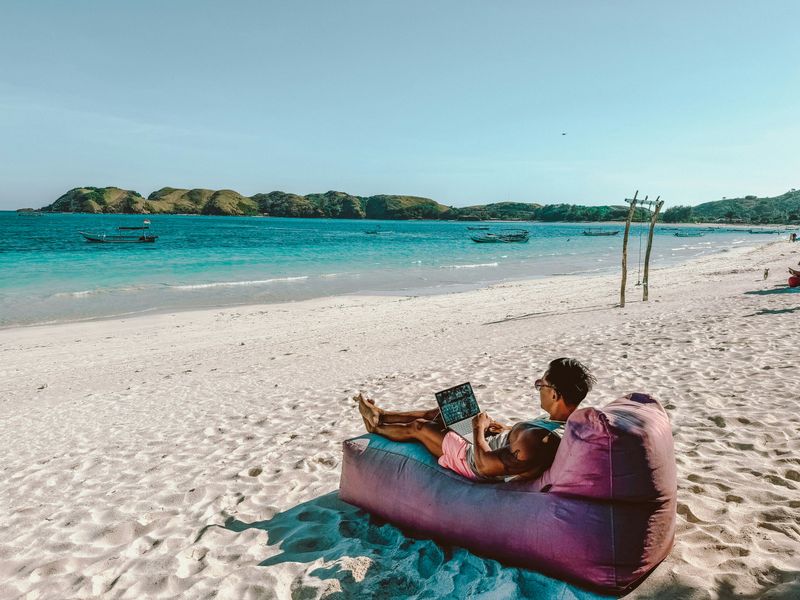 Photo by Johnny Africa on Unsplash
Here's the roadmap.
Decision 1: Decide What You Offer and Who Will Pay For It

Most people stall not because they lack options — but because they have too many. The digital nomad life doesn't require a reinvention. It requires clarity on two things: what you can do remotely, and who will pay for it. Get those right, and everything else follows.
What can you do remotely?
Tech · Writing · Design · Marketing · Teaching · Admin
Who will pay for it?
Remote employer — offers stable income, fixed hours
Freelance clients — flexible, you set the terms
Your own business — products, content, services
Pick the combination with the most traction for you right now. One skill, one income path, pursued consistently beats five ideas explored casually every time.
Explore 🔗
Questions to Ask Yourself
 Q: What if I'm not sure which path is right for me? Start with what's closest to what you already do. The goal right now is a path forward, not perfection. You can tweak things as you go.
Q: What if I want to keep my options open and try a few paths? One focused path moves faster than three half-committed ones. Pick the most realistic one and give it 90 days.
Check Your Knowledge
 Priya is a 26-year-old who has been a graphic designer for three years. She loves to travel and dreams of being a digital nomad. What can she do to make her dream come true?
A. Look for a company hiring remote designers.
B. Start freelancing in the evening and on the weekend.
C. Take an advanced design course to strengthen her skills before going remote.
D. Save up and go travelling.
Quiz
Select all actions that will move her foward:
Decision 2: Decide Where You'll Start

This is one of your most important decisions.
Most people pick their first destination with their heart. That's how savings disappear in three months. Pick it with your head first — the dream city comes later, and you'll enjoy it more when you arrive with income and a plan.

Your first destination is a launchpad. It should be affordable, well-connected, and — critically — somewhere you can legally live and work remotely.
Before you book anything, check three things:
Cost of living — use Numbeo or Nomad List to compare real numbers
Digital nomad visa — does the country offer one, and do you qualify?
Internet reliability — Nomad List scores cities by average connection speed
Consider This 🤔
A city at $800–900/month with a nomad visa and fast internet beats an expensive dream city every time. Save the dream city for year two — and arrive there with income, savings, and a visa strategy already proven.
Have 3–6 months of expenses saved before you go. That buffer is what makes this decision feel exciting instead of terrifying.
Questions to Ask Yourself
 Q: What if my dream destination is expensive? Make it your goal for year two. Choosing an affordable first base isn't settling — it's strategy. You'll arrive at your dream city with income, confidence, and savings in place.
Q: What if I can't decide between two cities? Pick the cheaper one. You can always move. You can't undo a savings account drained in three months.
Decision 3: How Covered Do You Want to Be Before You Leave?
The exciting decisions get all the attention. This one doesn't — and that's exactly why most people skip it.

Take a look at the following before you embark on your adventure, and save yourself a lot of headaches.
Health insurance — SafetyWing or World Nomads cover you internationally
Taxes — decide how you'll stay compliant in your home country
Banking — Wise keeps fees low across borders
Tech Gear — reliable laptop, noise-cancelling headphones, portable Wi-Fi
One afternoon now saves weeks of damage control later.
Questions to Ask Yourself
 Q: Can I handle this after I arrive somewhere? You can — but you'll be doing it while adjusting to a new place, managing clients, and figuring out where to buy groceries. Do it now, when life is still simple.
Q: What's the one item on this list that matters most? Health insurance. Everything else can be adjusted later. A medical emergency without coverage abroad is the fastest way to end the whole adventure.
Decision 4: Test It Out Before You Fully Commit
This is the decision that separates the people who thrive from the people who flame out. 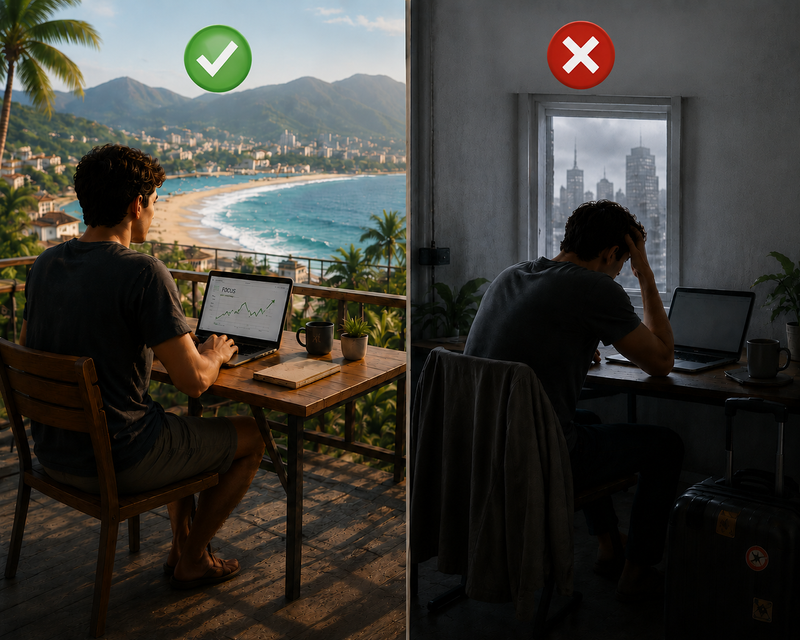
Two to four weeks working remotely from a new city gives you real data: How do you handle working alone all day? What happens to your focus when routines disappear? Do you actually enjoy the movement — or just the idea of it?
A test run isn't doubt. It's due diligence.
Questions to Ask Yourself
 Q: What if the test run goes really well? Then you leave with confidence, not just hope. That's a completely different headspace to build from.
Q: What if it reveals some challenges? Even better. Now you make your decisions with full information — not find it out six months in with no apartment to go back to.
 Still not sure if nomad life is really for you? Watch this WeNoMad video about someone who asked the same question — and went to find out: Do A Digital Nomad Test Run (Instead of Taking The Leap!)
Take Action
 Photo by Kid Circus on Unsplash
Your feedback matters to us.
This Byte helped me better understand the topic.