
Here's the problem with confidence: if it only comes from your last good game, you're in trouble. One bad day, one bad call, one off practice — and it's gone.
You need a better source. One that doesn't disappear the moment things go wrong.
You can develop confidence so that it lasts — confidence you can count on.
The Confidence Cycle
Confidence isn't something you either have or don't have. It's something you train — just like speed, strength, or balance. And like those things, it fades if you stop working on it.
There are five phases. They run in a loop, over and over, competition after competition.
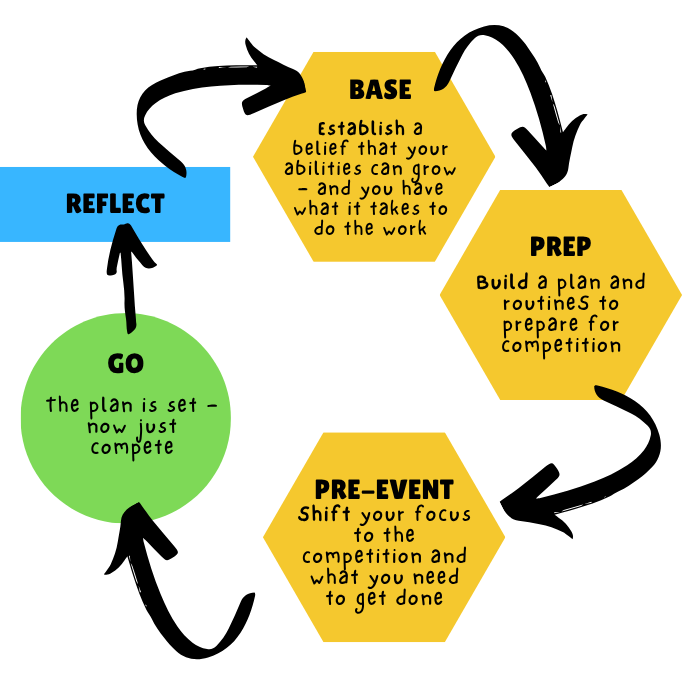 Image created by the author. To hear an audio description of the image, click play on the audio player below:
Base: Believe you can grow, and that you're willing to put in the work.
Prep: Build your plan and your routines.
Pre-event: Narrow your focus to what actually matters.
Go: The plan's set. Just compete.
Reflect: Look back, learn, and feed it into your next BASE phase
Think of it like this: confidence isn't about your best day ever. It's a mental skill you build on purpose, rep by rep — same as lifting weights. Skip the gym for a month and you lose strength. Skip your mental training, and your confidence gets soft too.
This is how elite athletes stay confident, even when their last game was rough.
Phase 1: Base
This phase is about your mindset. Before anything else, you need to believe two things:
You can actually get better at this.
Mistakes are part of how you improve — not proof that you're bad at it.
This is called a growth mindset. It means your skill level isn't fixed. It's not capped by talent you were born with — it grows based on the work you put in.
Map Your Goals
Grab a notebook (or your notes app) and answer these. Don't overthink it — just be honest.
My goal: What do I actually want to get better at?
What I'm already good at: Don't skip this. You need proof you've already got something to build on.
What I need to work on: Be specific. "Everything" isn't an answer.
My next step: One real, doable thing.
How I'll know it's working: What will you track or check?
Who can help me: A coach, teammate, or someone who'll tell you the truth, not just what you want to hear.
Olympic volleyball player Jeff Jendryk experienced a setback when he didn't make the Olympic team on his first try, after four years of training. Here's how he used the base phase to improve:
Mistakes Are Data, Not Verdicts
Make this your mantra: mistakes make you better.
The best athletes use practice time to mess up on purpose. They're not trying to look perfect in practice — they're trying to find out what happens when something goes wrong, so they already know how to handle it when it counts.
Quiz
Which beliefs will help you build confidence? Select all thoughts that apply:
Phase 2: Prep
Now it's time to narrow things down. Pick 2–3 things from your goal map to actually work on. Track your progress. And keep training your brain — not just your body.
Reframe the Negative
When something goes wrong, your brain throws out a thought fast. Your job is to recognize that it’s happening, and swap it for something useful.

Negative thinking:
"I'm pure trash today."
"I'm cooked, it's over."
"I don't belong on this line."
"I missed. I'm a choke artist."
"I have zero touch today."
"This hurts. I am soft."
"I'm mentally broken."

Change to positive:
"My mechanics are off, not my talent."
"This set failed. The next one's a clean slate."
"Run my routine — just like I practiced it."
"Find the problem. Slow the movement down."
"I'm just tired. Judging myself doesn't help right now."
"Breathe. Focus only on the next 60 seconds."
Train on Small, Specific Targets
Pick 2-3 small, specific goals — things you'll know when you nail them. For example:
Block out on a rebound (big pivot, use your body)
Solid foot on the landing (engage your core)
Quick turn on the wall (time it right)

A few habits that make this stick:
Watch videos of athletes you want to move like. Picture yourself doing the same thing.
Log your practices. What went well, what needs work — even two words count.
Don't judge yourself for mistakes. A bad rep is something that happened. It's not who you are.
Quiz
What should you be doing in your every day training? Select all actions that apply:
Phase 3: Pre-Event
This phase kicks in 2-3 days out from competition. By now, you've already done the real work — reframing your thoughts, visualizing your performance, and logging your practices. Trust it: you know it happened because you wrote it down.
Now: shift your focus. Pick 1-2 things that will actually make a difference in this specific competition — based on everything you've trained.

Make it concrete. A few examples:
The weather's cold and wet — how have you trained for that?
You're nursing an injury — how will you manage the discomfort?
You're facing the toughest competition in your region — how have you adjusted your training to be ready?
Phase 4: Go
It's competition day!
Your only job right now is helping your team win or beating your opponent.
Compete at your best. Things will go wrong — that's guaranteed, not a sign you're failing.
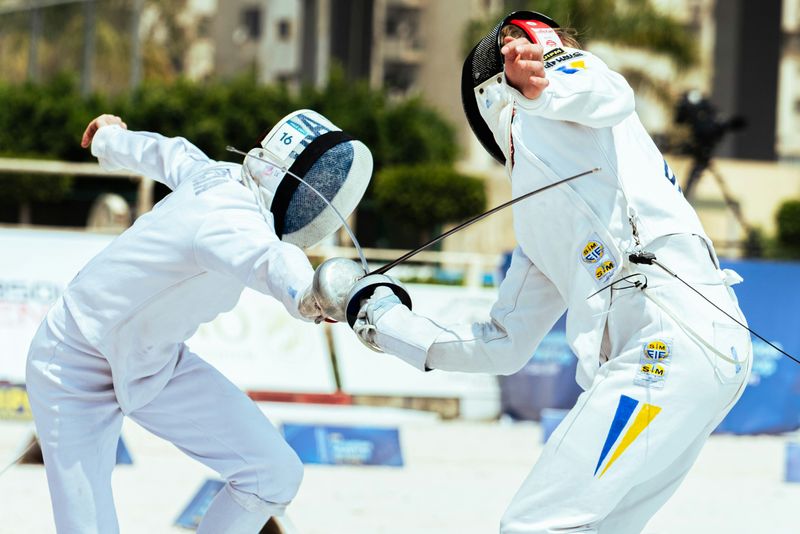 Photo by Omar Abozeid on Unsplash
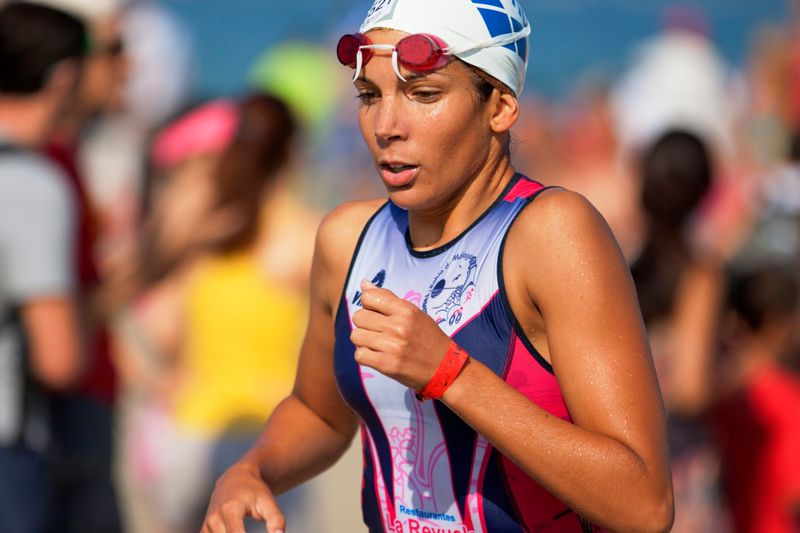 Photo by Quino Al on Unsplash
Phase 5: Reflect
Once you've cooled down — win or loss — it's time to look back.
Pull out your goal map and your practice log
Think through what actually happened during competition
Catch any negative self-talk before it settles in, and reframe it
Carry the useful thoughts forward into your next training cycle
 Photo by Sweet Life on Unsplash
Ask yourself:
Are my goals still the right ones?
Is my mindset still set on growth?
What worked? What didn't?
Then it loops — straight back into the base phase for the next cycle.
Take Action
Confidence is one of the hardest mental skills, because most athletes build it on one thing: how well they did last time.
You're doing something different. You're building it step by step, rep by rep, through training you can repeat — not through luck or a perfect last game.
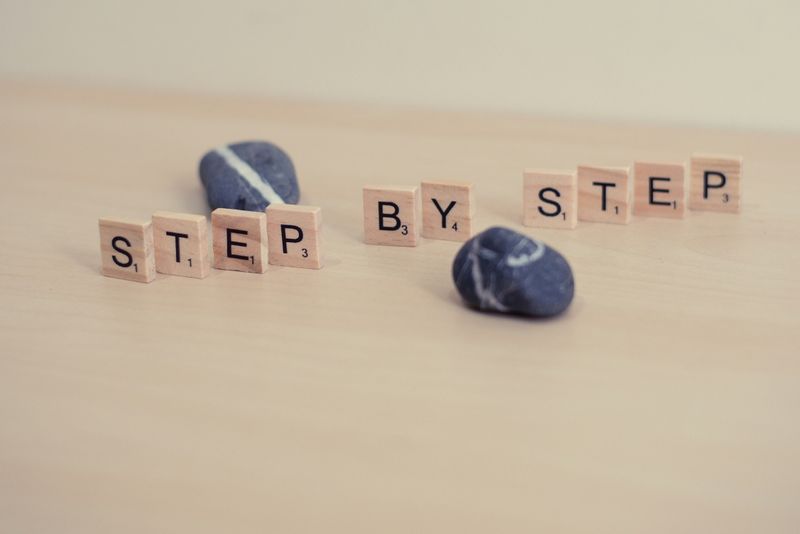 Photo by Kaja Kadlecova on Unsplash
Your feedback matters to us.
This Byte helped me better understand the topic.