
Ok, so you have this amazing project you want to complete, but you feel sluggish and unmotivated.

Wondering what you can do to turn things around? There are a few habits of highly effective people that you can use to get the ball rolling and tackle your creative project like a champ!
Step 1: Get a Good Night's Rest
 Ditch the phone and TV series binge watching for a good night's rest.
Research shows that getting a good night's sleep may help improve your concentration and productivity.
Good quality sleep has also been linked to creative behavior. So if you haven't been getting good quality sleep, this could be a good place to start.
3 tips to getting a good night's rest:
Set a fixed time to sleep every night — try to stick to this time as much as possible.
Adjust your phone's display settings to turn your phone's screen color to yellow closer to bedtime.
Limit daytime naps to less than one hour and don't nap in the evening.
Step 2: Get Some Exercise
 Walk, run, do yoga, go for a swim, or go to the gym!
Exercising not only improves your mood and motivation levels. Research shows that physical activity can "enhance immediate creative thinking."
Even a quick walk around the block is a great way to wake up your mind and body. It can also signal to your mind to start the "work" part of your day.
If the research isn't enough to motivate you to exercise, here are some super successful people's routines:

Barack Obama: The former US President works out for 45 minutes, 6 days a week. He also loves playing basketball.

Mark Cuban: The owner of the Dallas Mavericks and Shark Tank Judge does at least one hour of cardio, 6 days a week.
Here is a totally free, simple 10-minute workout you can do at home to get you started.
Step 3: Visualize Your Creative Task
 Photo by 3D Render on Unsplash
In his book The 7 Habits of Highly Effective People (you can access an online copy of the book), Steven R. Covey said that highly effective people "begin with the end in mind."
Visualizing your end goal is a powerful tool that successful artists, like Jim Carrey, use when they experience a creative block. For example, Jim Carry performs visualization meditation to relieve anxiety and stress that can cause creative blocks.
Other successful creatives like Quintin Tarantino would use the “The First Frame” method. They would look at a single vivid visual before anything else and then build the creative outcome around that emotional moment.
Here are a few simple ways to practice this:

Write down what it is that you want your project to look like.

Do a quick online search to find visual examples that inspire you, or go somewhere that you can see or hear work that is similar to what you're aspiring towards. Exchange ideas and brainstorm with like-minded people if needed.

Collect your visuals using a vision board.
Visualization Quiz
You are having difficulty visualizing a project you're working on. What can you do to help with your creative block? Select all that apply:
A. Go for a walk. Take pictures on your phone of anything that inspires you.
B. Do a few minutes of visualization meditation.
C. Tell a friend about your project. Ask them to share some Instagram accounts that have related visuals.
D. Go to an art gallery and view a striking painting.
Quiz
Select all that apply:
Step 4: Practice, Practice, Practice!
There is an old saying that goes "practice makes perfect". The TedEd video below explains how it works:
Kobe Bryant, who reportedly used to practice more than any other player in the NBA, was famous for his "deliberate practice". His method included:
Showing up, no matter what.
Repeating the same action (Kobe made 800 jump shots during every practice).
Being consistent every day with practice.
Whatever your creative project is — be it photography, graphic design, writing a novel, or even a song — keep at it and find ways to make it better. It's a great way to get over a creative hump!
Step 5: Don't Be Afraid to Fail
Successful people didn't get there by being afraid to fail. Here are some examples:
 Image courtesy of Wikimedia Commons
Very Wang
Before becoming a fashion designer, she aspired to be an Olympic figure skater but she failed to make the U.S. national team. She then faced obstacles working for fashion magazines, being passed over for editorial positions, before founding her successful wedding dress business.
Thomas Edison
He held 1,093 U.S. patents and invented the film camera but was "told by his teachers he was "too stupid to learn anything".
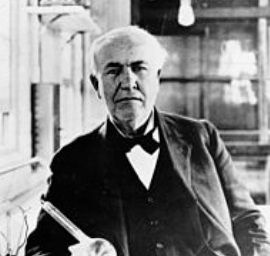 Image courtesy of Wikimedia Commons
 Image courtesy of Wikimedia Commons
Steven Spielberg
He was "rejected TWICE by the University of Southern California’s School of Cinematic Arts" before directing Jurassic Park and Indiana Jones and winning over 30 Academy Awards.

Remember — failing is part of succeeding!
The key lesson here is that these people didn't give up even after they failed. They took their failure in stride and kept on going, and this is true for many successful people in this world.
So keep trying! Don't give up on that project you are working on.
Quiz
A graphic design student creates a poster for a friend’s art show. When they reveal it, their friend doesn’t like it at all and says they won’t use it. How could the creator learn from this failure? What next steps should they take?
Take Action

Remember, success doesn't come easy! You need to work for it, and these habits will help you become successful:
Your feedback matters to us.
This Byte helped me better understand the topic.