
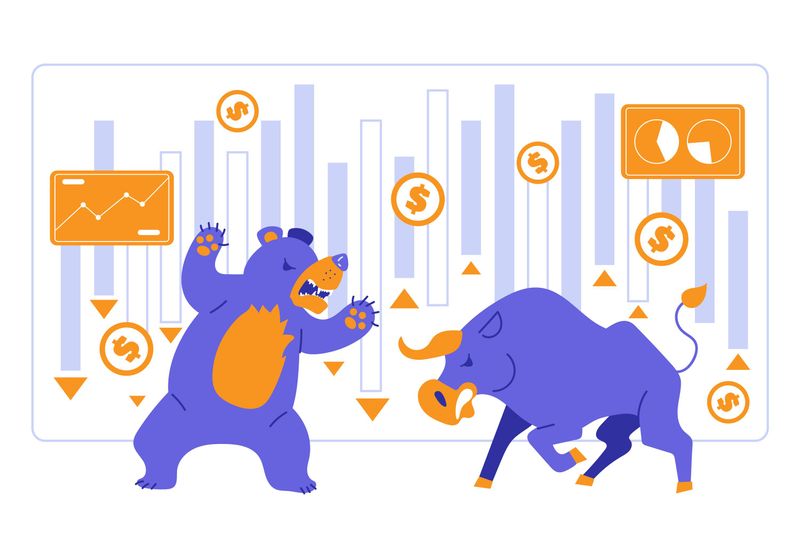
 Image courtesy of Freepik
Picture a bull in a fight. It charges forward and pushes upward with its horns.
A bear fights differently. It stands firm and swipes downward with strong paws.
In financial markets, these two animals represent the opposite directions prices can move: rising markets (bull markets) and falling markets (bear markets).
Knowing which animal is in charge can help you choose smarter investment strategies and avoid costly mistakes.
What Is a Bull Market?

A bull market happens when prices of investments, like stocks, rise steadily over time — usually when the economy is doing well, and investors feel positive and confident about the future.
Typical signs of a bull market:
Stock prices are going up
The economy is growing
Investors feel confident about investing
More people are putting money into the market
Bull market example: The rise in technology and AI companies in recent years has led to strong market growth.
What is a Bear Market?

A bear market happens when asset prices decline significantly, often defined as a drop of 20% or more from recent highs.

Typical signs of a bear market:
Falling stock prices
Economic slowdown or uncertainty
Increased investor caution
People may choose to sell their investments.
Bear market example: During COVID-19, markets fell sharply due to global uncertainty.

Why Market Cycles Matter
Financial markets do not move in one direction forever.
They rise and fall because of changes in the economy, business performance, and investor behavior.
Markets move between bull and bear phases for several reasons:
Changes in the economy — When the economy grows, markets often rise. When growth slows, markets may fall.
Interest rates — When borrowing becomes more expensive, people and businesses may invest less.
Company performance — When companies do well, prices often rise. When results are weak, prices can drop.
Investor emotions — When investors feel confident, they buy more. When they feel worried, they may sell.
Investment Strategies for Bull Markets
 .When markets are rising, investors often focus on taking advantage of increasing prices:
Buy and hold — Invest in strong assets and keep them over time to benefit from rising prices.
Keep investing in a rising market — Continue buying if you believe your investments will grow further.
Buy during price "dips" — Take advantage of stocks with short-term price drops to buy before prices rise again.
Let your investments grow — Avoid selling too early and allow strong performers to increase in value.
Stay invested — Don’t try to time short-term changes. Staying in the market helps you benefit from long-term growth.
Quiz
The market has been rising steadily. Prices are increasing, and investors feel confident. Taylor wants to make the most of this growth. What is the best approach?
Investment Strategies for Bear Markets

When markets are falling, investors usually focus on managing risk and staying patient:
Invest gradually — Invest smaller amounts regularly to reduce risk and take advantage of lower prices.
Rebalance your portfolio — Adjust your investments to maintain your planned mix, as some assets fall more than others.
Avoid panic selling — Markets can recover, so don’t make decisions based on fear or negative news.
Focus on strong, stable investments — For example, large, well-established companies often perform more steadily during downturns.
Consider defensive sectors — Sectors like healthcare, utilities, and food companies often perform more steadily during downturns.
Keep some cash available — Having cash allows you to invest when better opportunities arise.
Quiz
The market has been falling for several months. Prices are unstable, and news reports are mostly negative. Jordan wants to keep investing but is worried about making losses. What is the best approach for Jordan in this situation?
Safe Investing Habits
Bull and bear markets behave differently, but some key investing habits apply in both situations.
 Image created by author using Canva
Keep an emergency fund — Save 3–6 months' worth of funds for unexpected events and expenses.
Diversify — Spread your money across assets like stocks, bonds, property, or cash to reduce risk.
Think long-term — Stay focused on your goals, not short-term changes.
Review investments regularly — Check and adjust your investments when needed.
Be careful with overconfidence — Don’t chase trends without proper research.
Quiz: Jordan's Investments
Jordan started investing recently. The market has dropped more than 20%. News reports warn about an economic slowdown, and many investors are selling stocks.
 Photo by Mathieu Stern on Unsplash
What strategy might help Jordan manage risk during this period?
A. Invest all savings in fast-growing technology stocks.
B. Focus on diversification and defensive investments.
C. Ignore market conditions completely.
D. Buy only the most expensive stocks available.
Quiz
Select the strategy that might help Jordan manage risk during this period:
Take Action
 Image courtesy of Freepik
Markets will always move through bull and bear cycles, but thoughtful investors stay informed and focused on long-term goals.
Your feedback matters to us.
This Byte helped me better understand the topic.