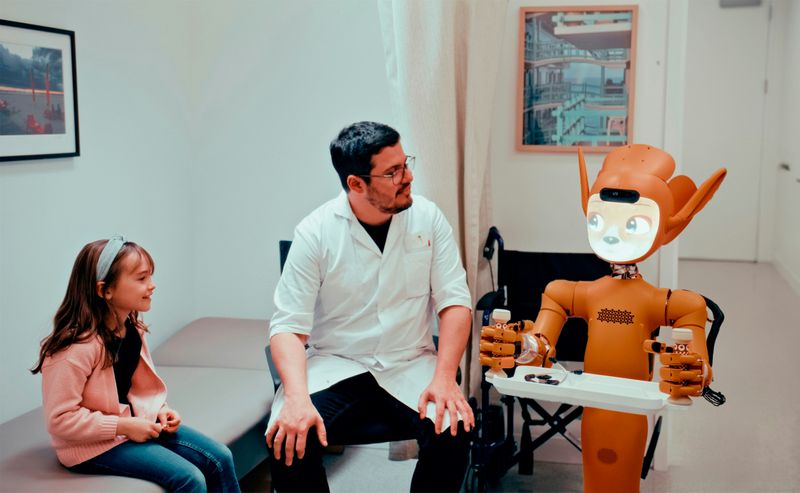
 Photo by Enchanted Tools on Unsplash
The AI revolution is transforming industries across the globe. AI is said to revolutionize systems by making them more accurate and efficient.
But what about medical care?
Can AI provide more accurate diagnostic systems?
Can it lead to better health outcomes for patients?
Most importantly, are AI tools in healthcare safe?
How is AI is Used for Healthcare
The current landscape of AI for medical diagnosis is changing rapidly. Many AI tools and systems are still in their infancy. However, AI is already creating waves in the medical community:
According to Statista, the AI in healthcare market — valued at just $11 billion in 2021 —is projected to skyrocket to nearly $187 billion by 2030. This explosive growth highlights the accelerating adoption of artificial intelligence in healthcare, signaling major transformations ahead for hospitals, medical providers, pharmaceutical firms, biotechnology companies, and the broader healthcare ecosystem.
The aim is to build a more accurate, personalized, and efficient healthcare system.
The impact is already being felt. Companies across the healthcare sector are using the power of AI to develop a variety of programs and products for medical diagnosis.
 Take a moment to imagine this:
Your doctor uses a stethoscope and blood pressure cuff that connect to an AI-powered database containing information on the early detection of heart disease. This technology allows for earlier and more accurate identification of cardiovascular conditions.
One study showed that the use of these tools could detect cardiovascular disease with a 93% accuracy rate.
Pros of AI for Medical Diagnosis
As noted in a recent report, "diagnostic errors affect more than 12 million Americans each year, with associated costs likely in excess of $100 billion." That's a huge waste!

So how can AI help? In addition to decreasing diagnostic errors and saving billions of dollars, AI can:
Detect diseases earlier
Assist doctors with decision making
Create personalized care plans
Diagnose rare diseases
Provide specialty medical access to underserved communities
These improvements can help doctors deliver higher-quality care while eliminating some of the challenges that most healthcare systems face.
So what problems can AI for medical diagnosis help with?

Problem: Currently, rural areas are struggling. Access to medical care is limited. For example, in Northern California, the shortage of specialist doctors has been deemed an emergency.
How AI can help: AI diagnostic tools can expand a doctor's capacity to provide more specialized care. With increased capacity, physicians can see more patients and provide care for complex cases when specialists aren't available.
Problem: Medical diagnostics are complex. Decoding the layers of a patient's symptoms takes time and resources. Errors can negatively affect the health outcomes of patients.
How AI can help: AI diagnostic tools can use multiple data points to find patterns that humans can miss. Doctors using AI for medical diagnosis can gain a clearer picture of a patient's health.
Cons of AI for Medical Diagnosis
With all the promises AI brings, it seems like the perfect tool to help solve some of the most pressing health care challenges.
However, like most things, there are risks to consider when using AI for medical diagnosis.
As with any technology, care must be taken to ensure that these tools don't harm those they intend to help.
 1. Is patient data safe?
One big concern with AI for medical diagnosis is that it relies on large amounts of personal data. In healthcare, this means using extremely sensitive personal data.
Keeping this information safe and secure is one of the central concerns in the use of AI systems in healthcare.
For example:
In 2026, a ransomware attack on a medical diagnostic firm compromised the data of almost 140,000 patients.
 2. Can AI check its biases?
The data healthcare AI systems use represents all the populations served.
The lack of medical data collection in underserved communities can lead AI systems to develop internal biases.
For example:
In a case study of an AI diagnostic tool, researchers found that AI suggested less care for Black patients than for White patients, even though the Black patients were sicker. The data was based on the fact that Black patients in the community spent less on medical care. The algorithm translated this to mean they needed less care.
3. Can AI do all it promises?
While the potential is there, AI system adoption still faces delivery challenges.
Since most of these systems are currently still being developed, real-world applications haven't been studied enough for doctors to decide if they're actually helpful.
The vision is there — but for AI tools to be seen as valuable companions to doctor-led care, they have to prove they can provide all they promise.

4. Is AI safe for patients?
Safety is a top concern for those considering using AI for medical diagnosis. Errors in AI systems could lead doctors to misdiagnose their clients.
The Future of AI for Medical Diagnosis

In the not-so-distant future:
Developers, policymakers, researchers, and AI could work together to detect diseases earlier, ensuring higher survival rates.
Healthcare providers could become more efficient by using AI for medical diagnosis, reducing waste and, in turn, lowering healthcare costs.
Patient care could become more individualized, with AI tests used to gain a complete picture of a person’s health.
The possible result: better care and better health.
Check Your Knowledge
 Photo by Sander Sammy on Unsplash
You wake up in the morning with a horrible headache and a feeling that the room is spinning. After trying your usual list of headache easing strategies, you are unsuccessful in making yourself feel better. You decide it's best to head into the doctor's office.
 When you enter the office, you're informed by the receptionist that they are testing a new AI-assisted diagnostic tool. They ask if you'd be ok if the doctor used it during your visit.
You're not sure, so you decide to ask the doctor some questions before allowing them to use the tool.
Choose the questions that will help you make your decision:
A. "How will my data be used? What will you do to protect it from improper use?"
B. "How will you use the information provided by the AI tool? How will it help me?"
C. "Why are you choosing to use this tool? How will it improve my care?"
D. "Does this mean that in the near future, we won't need doctors anymore? Will Al take over?"
Quiz
Choose any questions that will help you make your decision:
Take Action

Your feedback matters to us.
This Byte helped me better understand the topic.