
Architecture isn't about great design and technical skills alone.
 Image courtesy of mindandi via Freepik.com
You can have the most creative idea on paper, but if you can't explain it to your client, it might not fully come to life.
Developing client communication skills helps you bridge the gap between your design and the final outcome that matches their expectations.
You can communicate more effectively with your clients by focusing on a few key practices.
1. Listen, Don't Just Hear
 Image created by the author using AI
Clear communication depends on active listening. Listen to your clients not just to reply, but to understand their needs, preferences, and vision.
Listen without interrupting them.
Ask deeper questions to understand their lifestyle and what matters to them.
Clarify broad terms like modern, spacious, cozy.
Repeat what they say to confirm you understand.
Example 1
If the client says: "I want a modern living room, but it shouldn't feel too cold or impersonal."
 Instead of saying: "Okay, we'll go with a minimalist design."
 Understand their vision by asking: "When you say 'not too cold', do you mean warmer lighting, softer materials like wood and fabric, or a more intimate seating layout?"
Example 2
If the client says: "I want a home office that's quiet but still feels connected to the rest of the house."
 Instead of saying: "Okay, we'll keep the office in the quietest corner of the house."
 Paraphrase to understand their need: "So you need a space that's private enough to focus but not completely isolated from the rest of the house. Is that correct?"
2. Go Easy on Archi-Speak
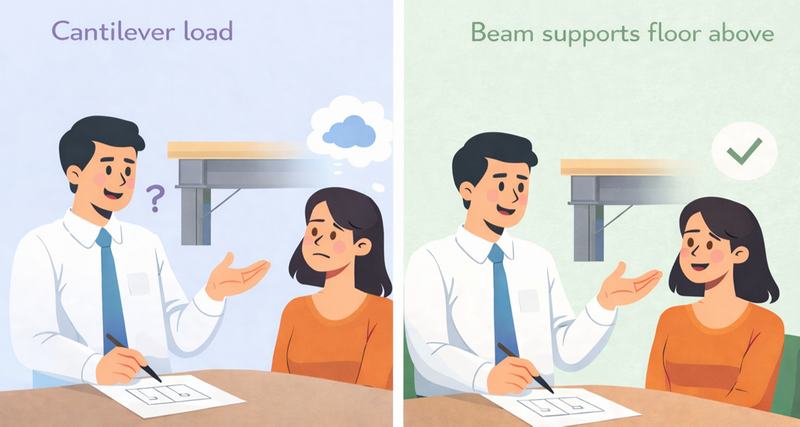 Image created by the author using AI
Clients can be overwhelmed by architectural jargon and complex blueprints they don't understand.
Translate technical terms and details using simple language.
Use everyday analogies, metaphors, and comparisons to explain.
Be clear and straightforward to show them the benefits of your plan.
Example 1
 Instead of saying: "We've used insulation to improve thermal efficiency."
 Use a simple analogy: "We've designed the walls to hold the indoor temperature better, like how a good thermos keeps your drink hot or cold for longer."
Example 2
 Instead of saying: "We're implementing clerestory windows on the southern elevation."
 Show them how you can solve their problem: "You'll get soft, natural light all day without losing any privacy or wall space for your artwork."
3. Show, Don't Just Tell
 Image created by the author using AI
Leverage the power of visuals to enhance communication with your clients.
Use sketches, videos, or presentations to bridge the gap between what you say and what they see.
Show real examples or similar designs to make your ideas and choices concrete.
Use visual storytelling to help clients see how your designs solve their problems.
Example 1
If the client says: "I can't really picture how this space will feel any different."
 Instead of saying: "It'll improve the layout and usability."
 Show them and explain:
 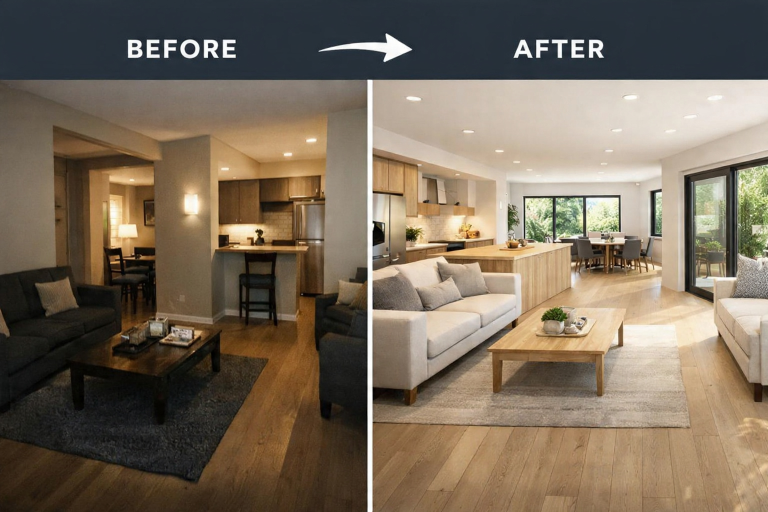 Image created by the author using AI
"Here's how the space looks now — and here's how it becomes spacious after we remove this wall. It'll feel brighter, airy, and easier to move through."
Example 2
If the client says: "I'm not sure how these materials will look together in my bedroom."
 Instead of saying: "It'll create a cohesive aesthetic."
 Show them and say:
 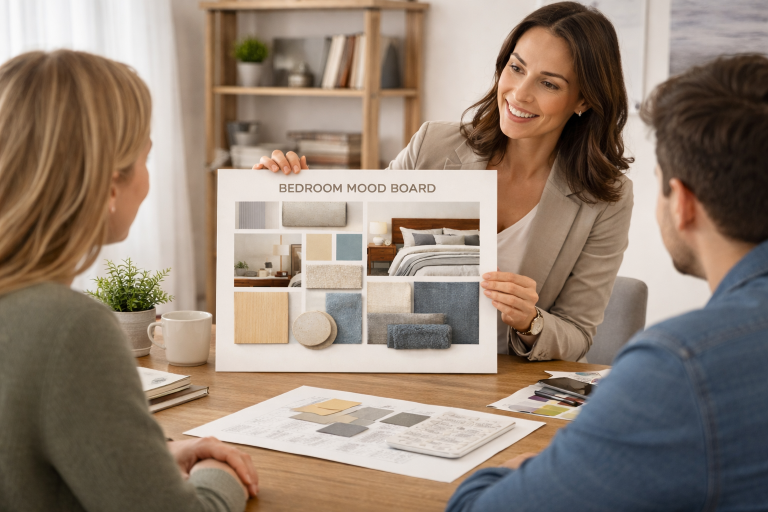 Image created by the author using AI
"I've put together a mood board so you can see how the colors and materials work together."
4. Keep Them in the Loop
 Image from Freepik.com
Make your clients feel included by keeping them informed and involved in each phase of the project's lifecycle.
Document all decisions, changes, and meeting notes. Share and confirm them with your clients.
Share regular updates through photos, messages, or meetings.
Encourage feedback so clients feel heard and understood.
Set clear expectations about timelines, the project budget, and the scope of work to avoid confusion.
Example 1
If the client says: "I think we agreed on changing the flooring style earlier?"
 Instead of saying: "Yes, I remember that."
 Keep them in the loop by saying: "Yes, I'd shared that in my last email. Let me send you the updated plan again so we can confirm everything before moving ahead."
Example 2
If the client says: "I've thought of a new addition to the bathroom. Can we include it now?"
 Instead of saying: "Yes, we can always adjust."
 Be polite and firm: "We can discuss the idea. But since the bathroom work is almost done, even small changes now can impact plumbing lines and fittings, so it may require some rework."
5. Navigate Disagreements Smoothly
 Image created by the author using AI
It is common for clients to disagree with you during the design process. Respond thoughtfully to foster trust and communication.
Acknowledge the client's ideas instead of dismissing them immediately.
Explain your logic and design decisions in simple, respectful language without sounding defensive.
Stay flexible and explore their ideas.
Offer balanced alternatives without compromising on important design aspects.
Example 1
If the client says: "I want darker flooring in the bedroom. It'll look classier."
 Instead of saying: "That definitely won't work for this space."
 Provide a balanced approach: "That's a great choice visually. In a bedroom like this, darker flooring might make the space feel smaller and heavier. But we could use it around the bed area and keep lighter tones elsewhere to balance the look."
Example 2
If the client says: "As a family, we like to be around each other during cooking and right now the kitchen feels cut off. We want to move it closer to the living area so it's more open and social."
 Instead of saying: "We've already finalized this layout, and it works best structurally. Changing it now would just complicate things."
 Explain your rationale: "I understand you want the kitchen to feel more connected to the living space. The current layout was planned around plumbing and structure, so relocating it would be a big change. We can explore ways to open it up or improve the connection without moving it entirely."
Quiz: When Your Client Can't Explain What They Want
You've been meeting your client, Roy, to discuss the design of their new dance studio. They struggle to express their style, give vague feedback, like "make it feel more open", and reject every open-concept layout you present. You haven't been able to finalize the design yet.  Image created by the author using AI
How can you move the project forward? Choose the most appropriate option:
A. Ask them to explain what they didn't like in each option.
B. Ask them to describe how dancers will move through the space during a session.
C. Show them different design styles and suggest what you'd prefer.
D. Wait until the client can clearly define their preferences before proceeding further.
Quiz
In the scenario given above, how will you move the project forward? Choose the most appropriate option.
Some More Tips to Help You
 Practice regularly by role-playing or conducting mock presentations independently or with colleagues.
 Personalize your communication based on your client's priorities. For example, if your client is environmentally conscious, discuss sustainable options and eco-friendly materials.
Consider professional courses or workshops to improve your client communication skills.
Take Action
Communicate your ideas clearly and confidently with your clients and bridge the gap between what they imagine and what they get.
 Image created by the author using AI
Your feedback matters to us.
This Byte helped me better understand the topic.